How Screw Pull Works
Screw Pull looks simple when you first open it. You click a screw, move it into an available hole, and try to free the wooden pieces on the board. The puzzle gets interesting because the screws are holding several pieces in place at once. Removing one can make a plank drop, swing, or shift into a position that changes what you can reach next.
That makes the order of your moves the real puzzle. You are not trying to remove as many screws as possible. You are trying to remove the right screw without creating a blockage that makes the next part harder.
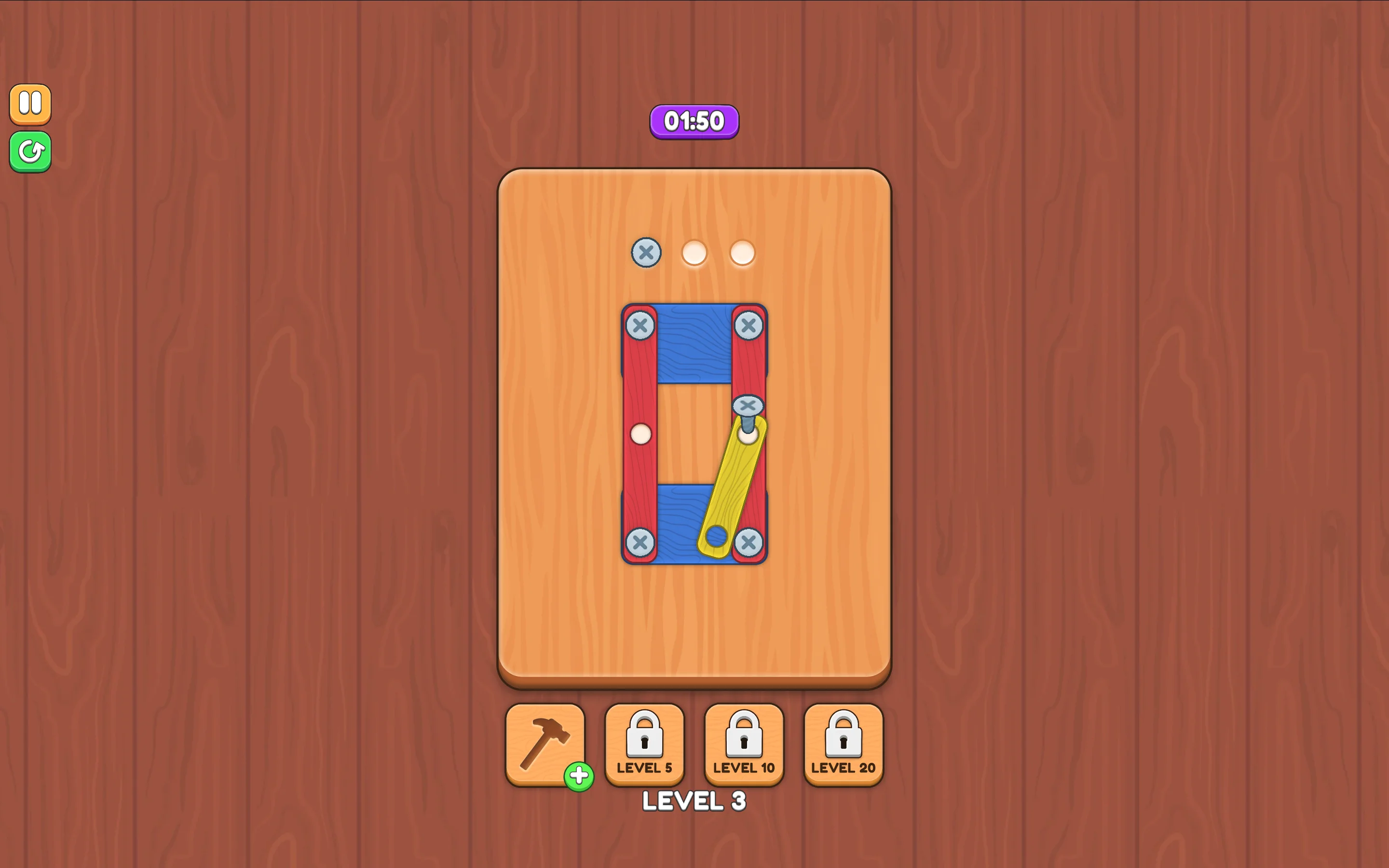
Read the board before moving a screw
Look at the wooden pieces first, then trace which screws are actually supporting them. A screw that looks easy to remove may be holding a board that sits over another important screw. Pull it too early and the falling piece can occupy the space you wanted to use later.
Open holes are useful because they give you somewhere to move a selected screw. That extra space can be the difference between a clean solution and a board that slowly runs out of options. It is worth checking where your next screw can go before you commit to the current move.
Why loose planks cause problems
Once a plank is no longer fully supported, gravity starts doing part of the puzzle for you. A piece can drop away and open a new route, but it can also swing into another section and cover something you still need. The board can change after every successful action, so the move you are planning should account for what the pieces will look like after they settle.
This is also why solving from the bottom upward can sometimes help. Freeing a lower piece may give you a cleaner board and expose a pin that was difficult to reach. It is not a rule you should follow blindly, though. The best sequence depends on which pieces are connected in the current layout.
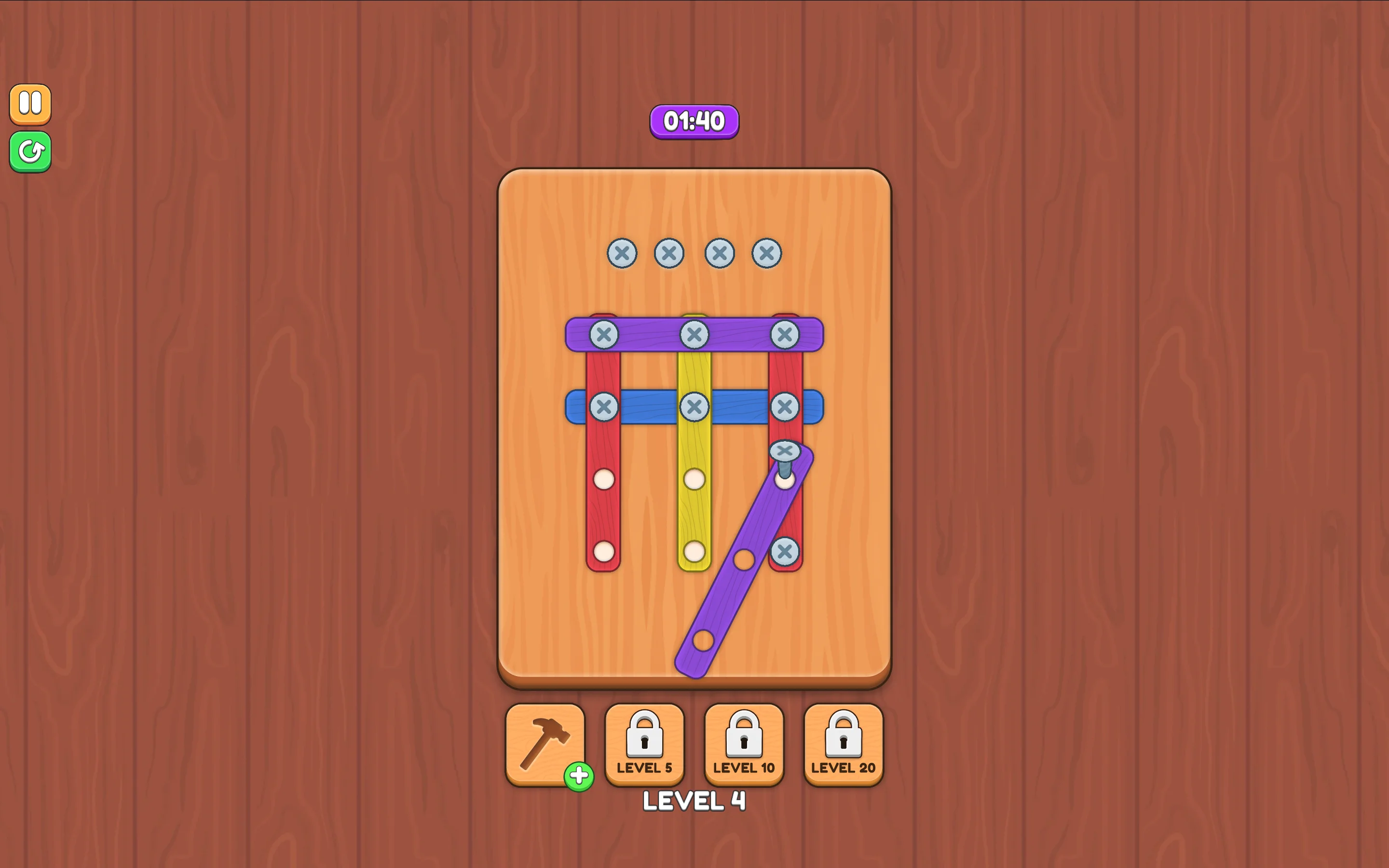
A safer way to solve Screw Pull
Before your first move, identify the pieces that are already loose and the screws that are shared by multiple boards. Deal with moves that increase access before moves that reduce it. If a screw can be removed without making another important screw harder to reach, that is usually a more useful action than simply choosing the most obvious pin.
The controls are easy to learn. The hard part is resisting the urge to click immediately. Give the board a few seconds, work out the likely fall direction, and then start the sequence.
Common Screw Pull mistakes
The most common mistake is removing the easiest screw first. Easy does not mean safe. Another is filling your open holes too quickly and leaving no room for a later move.
Screw Pull rewards players who plan one or two actions ahead. Once you start thinking about the wooden pieces instead of the screws individually, the puzzles become much easier to read.
More Puzzle Games on GamesLoom
If you enjoy spatial planning and methodical disassembly in Screw Pull, explore our broader catalog of brain-teasing puzzle games. Try Block Blast Puzzle for spatial grid management, test your liquid sorting logic in Water Sort Puzzle, or draw unbroken geometric paths in One Line.