One Line: Planning a Route Before You Draw
One Line is built around a simple idea: complete the puzzle with one continuous stroke. The control is easy because you mostly need to drag through the route, but the solution can be difficult to see because the first few moves can determine whether the rest of the shape is still possible.
The safest way to play is to treat the board as a route that has to be completed in one visit. Once you use a segment, you cannot casually reuse it, so a path that looks fine at the beginning can create a dead end near the finish.
Do not start drawing too quickly
Before touching the first point, look over the entire shape. Find the sections that have only one obvious exit and the areas where several routes seem possible.
Those tight sections are usually more important than the easy center. If you use a forced connection in the wrong part of the route, you can leave the difficult section disconnected later.
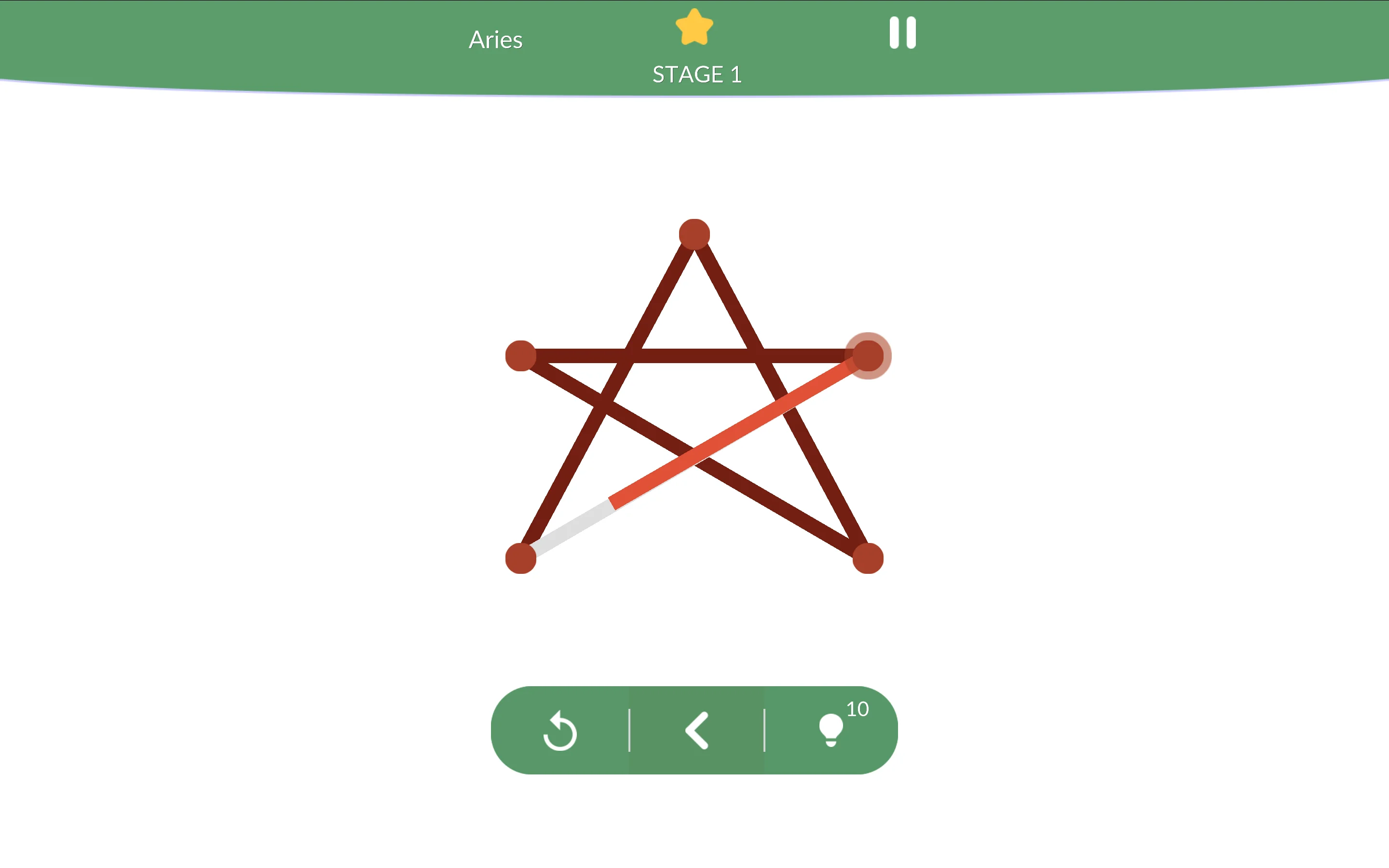
Watch the points with fewer options
A useful way to read a One Line puzzle is to look for points that have an odd number of available connections. These are often the points that constrain where your route can start or finish.
You do not need to think of the puzzle as a math problem while playing. Just notice which points feel restricted. A corner with only one useful exit is more important than an open point with several possible paths.
Crossing lines are not the same as crossing points
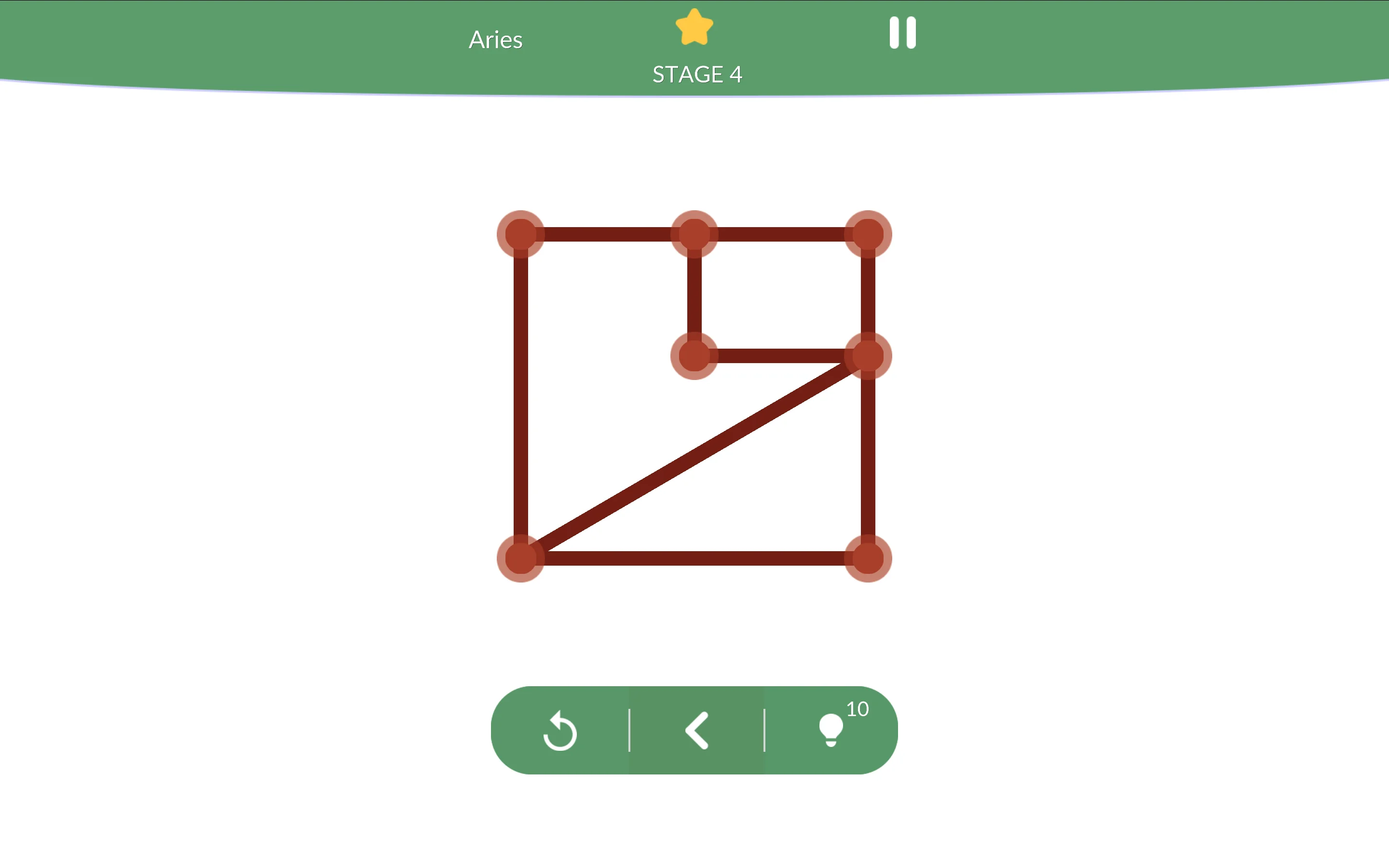
Keep an eye on where the route actually connects. A visual crossing does not always mean that two paths share the same point, and assuming that they do can send your line onto the wrong segment.
Follow the actual nodes and connections shown on the board rather than drawing what looks like the shortest visual route.
Why slower is usually better
There is very little benefit in rushing the drawing itself. The hard part is choosing a valid path, not finishing the drag as quickly as possible.
If a route fails, look at the exact point where the remaining path became impossible. That tells you more than simply restarting and trying random alternatives.
Common One Line mistakes
Starting from an attractive-looking corner without checking the rest of the board is a common error. Another is saving a forced section for the very end and discovering that the route can no longer reach it.
Plan first, then draw. Once the route is clear in your head, the actual input becomes the easy part.
More Logic Puzzles on GamesLoom
If you appreciate clean geometric reasoning and topological puzzles like One Line, explore our other brain teasers. Link matching nodes in Connect Dots, bend 3D strings in Line Puzzle 3D, or solve mechanical pin puzzles in Screw Pull.