Spatial Grid Mapping and Recall Tactics in Find Pairs
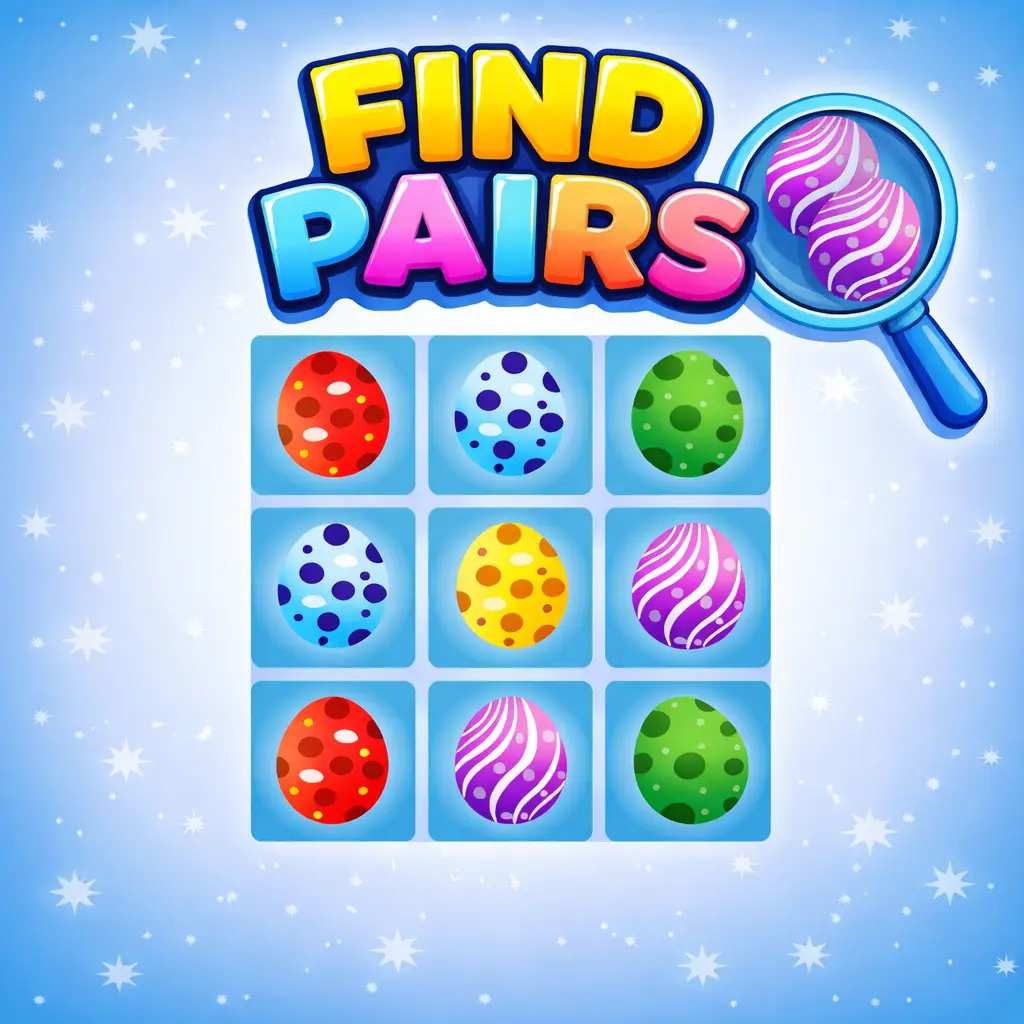
Find Pairs represents the purest form of visual concentration. A grid of face-down cards lies before you, concealing pairs of colorful illustrations: friendly animals, delicious fruits, or cheerful vehicles. Tapping a card flips it face up to reveal its image. You then tap a second card. If the pictures match, the pair remains face up or clears from the board. If they differ, both cards flip face down again after a brief pause.
While luck plays a minor role in your first two flips, relying on chance quickly turns larger 4x4 and 6x6 grids into frustrating guessing games. Consistent memory masters do not rely on photographic recall; they use systematic grid scanning and verbal labeling to map the board with computer-like precision.
Grid Coordinate Scanning Versus Random Tapping
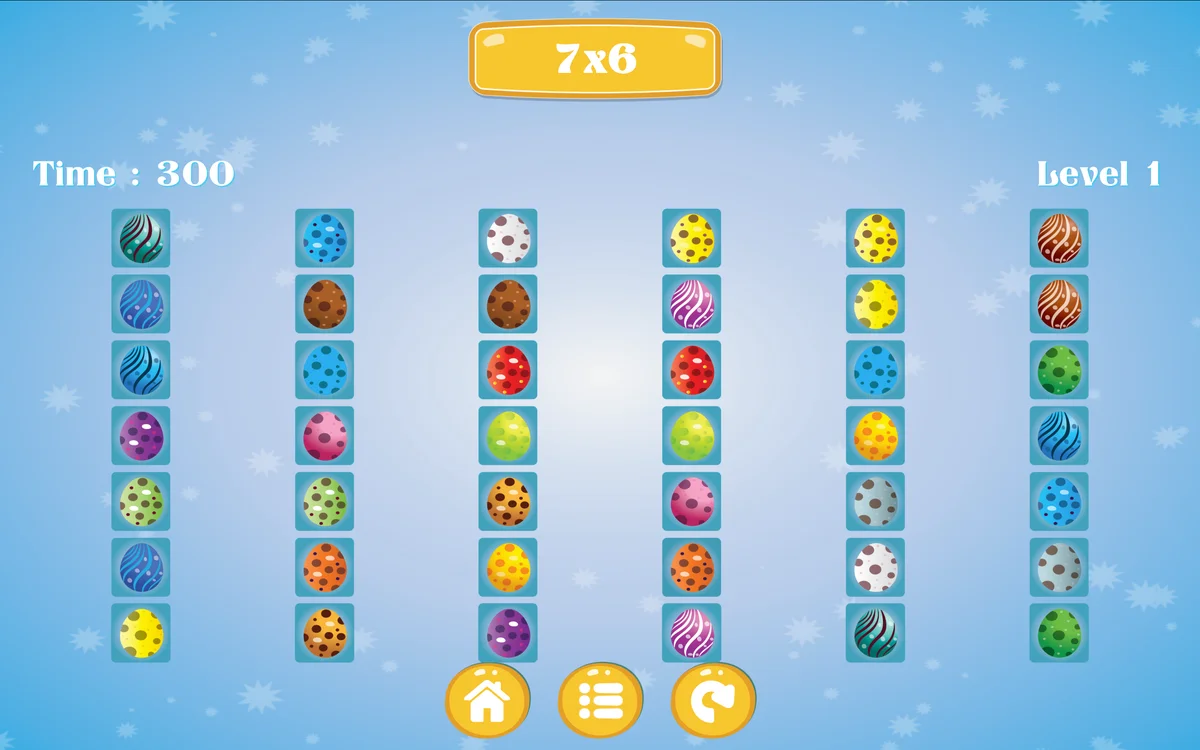
The cardinal sin in Find Pairs is scattered tapping: flipping a card in the top-left, then a card in the bottom-right, then one in the middle. This haphazard approach fractures your spatial memory because your brain has no relational context to connect the image to its position.
Adopt an orderly reading pattern: top to bottom, left to right, like reading the pages of a book. On your first turn, flip Row 1 Column 1, then Row 1 Column 2. Even if they do not match, you now possess exact spatial anchors for two cards. Continuing down the row in sequential order builds an organized mental map, making it effortless to recall where a card lives when its counterpart surfaces later.
The Verbal Tagging Technique
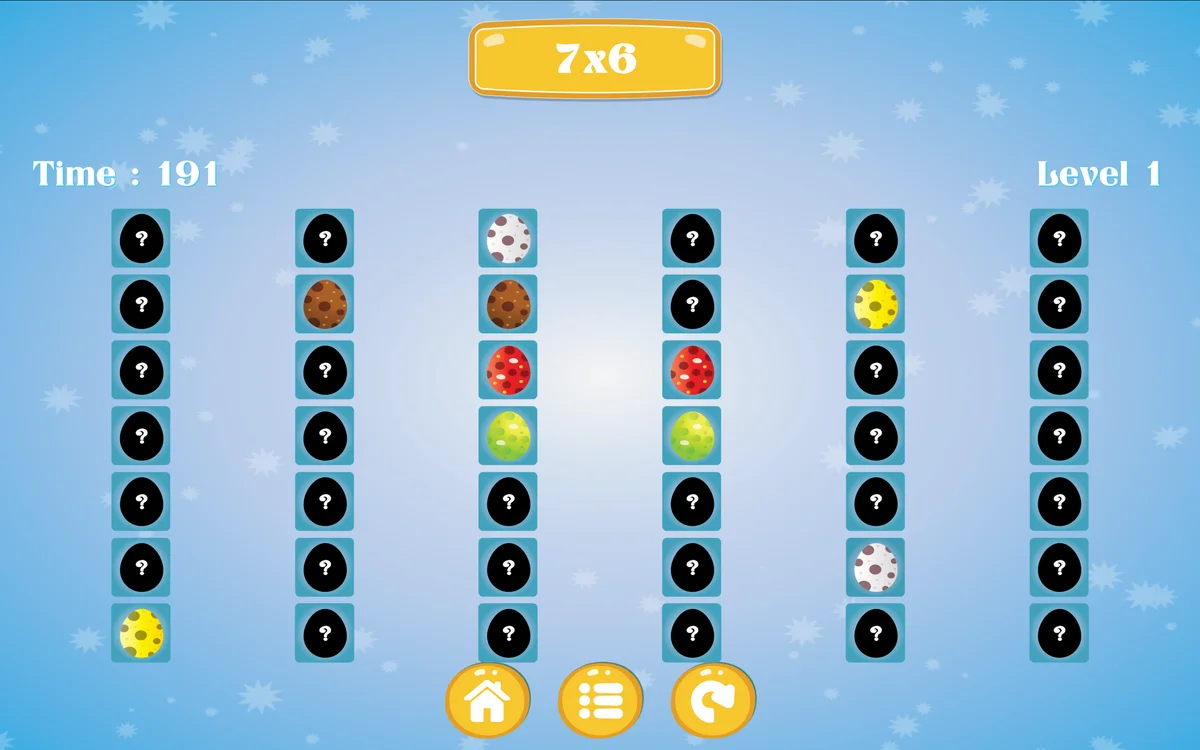
Visual images can blur together under pressure, especially when cards share similar color palettes like an apple and a strawberry. Overcome this by giving every revealed card a distinct, punchy verbal tag as soon as it flips: "Top-left Tiger," "Center Apple," "Bottom Car."
Saying the label in your mind engages both the visual and auditory processing centers of your brain, dramatically increasing retention strength. When you flip an unknown card three turns later and see a Tiger, your auditory memory instantly echoes: "Top-left Tiger!" You can snap your finger to that exact card without a second of hesitation.
Executing Discovery Flips Safely
Whenever you start a new turn, make your first flip an unknown, unrevealed card. If that first card happens to be something you have already seen elsewhere on the board, your second flip should immediately target the known location to score the match. If the first card is brand new, use your second flip to explore another unknown card, expanding your knowledge base by two fresh data points.
On mobile screens, tap gently and wait for the brief flip animation to finish before making your next selection. Rushing inputs can queue accidental double-taps on the same tile. Calm, structured scanning and sharp mental tags will let you clear even the most complex card grids with minimal flips.