Honeycomb Geometry and Tessellation in Fill Hexa Puzzle Game
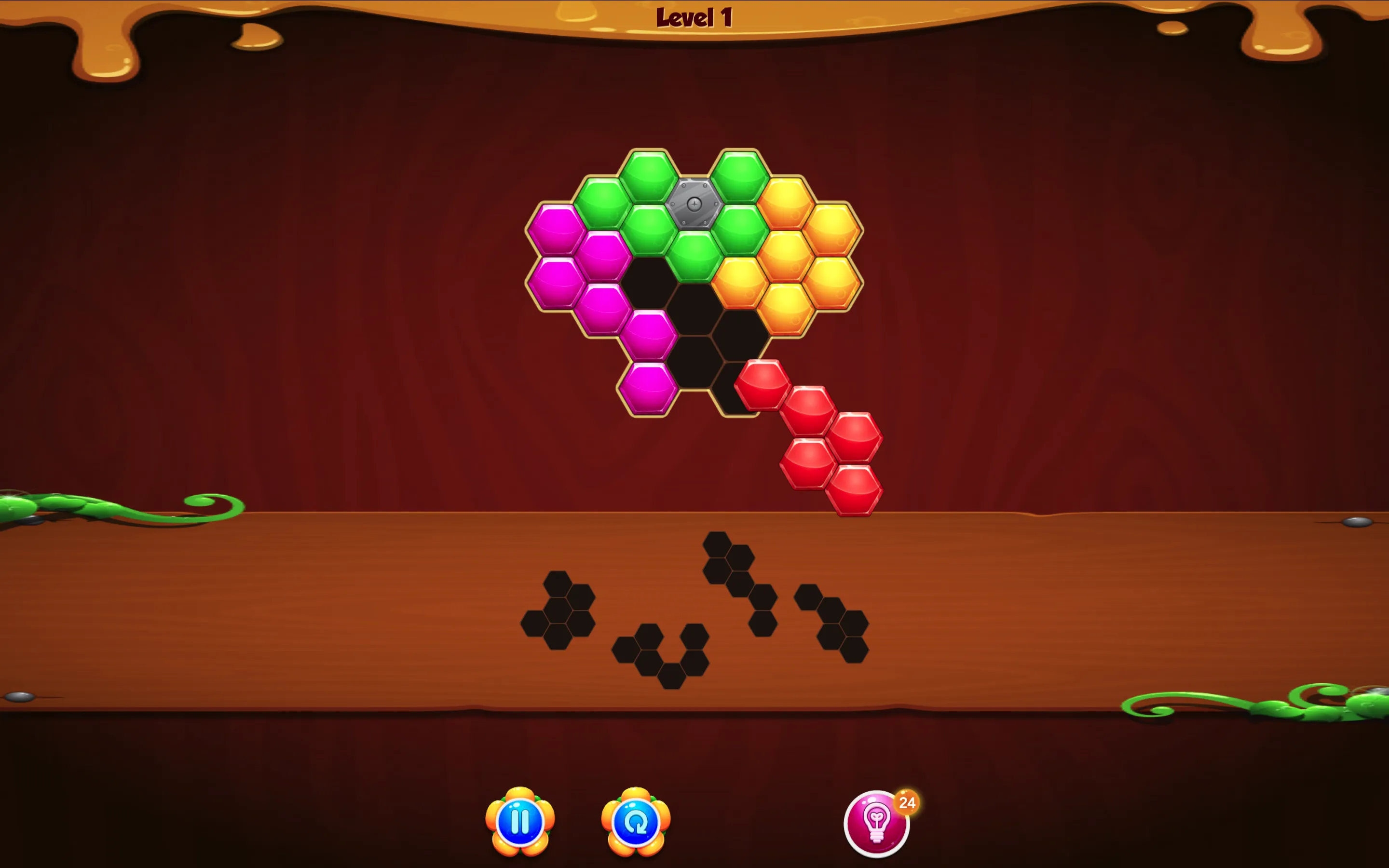
Fill Hexa Puzzle Game takes the timeless spatial satisfaction of block placement puzzles and maps it onto a geometric honeycomb grid. Instead of rigid four-sided square grids, you work with hexagonal tiles that touch six neighboring cells. Below the board rests a tray of colorful polyomino shapes constructed from clustered hexagons: straight rods, obtuse angles, triangular wedges, and complex branched clusters.
Your objective is to drag these shapes from the tray onto the honeycomb grid to complete unbroken lines of tiles. In a hexagonal grid, lines run in three distinct diagonal directions: diagonally left, diagonally right, and horizontally across. Completing any full line instantly clears those hexagons in a cheerful pop animation, opening up fresh territory for subsequent placements. With no countdown clock pressuring your moves, success rests entirely on disciplined board architecture.
Managing Rigid Shapes and Placing Awkward Pieces Early
Because hexagonal shapes cannot be rotated, their orientation is strictly locked to the angle displayed in your bottom tray. A straight three-hex rod angled at sixty degrees will only fit into slots that match that exact slant. This geometric constraint makes large, rigid pieces your greatest threat.
Whenever an oversized or oddly angled shape appears in your selector tray, find a home for it immediately. Do not place easy two-tile pieces first and hope that space opens up later. Fit the most restrictive, bulky pieces along the outer borders of the board while you still have wide open real estate. Reserve your small, flexible single and double tiles for patching small gaps and triggering clutch line clears.
Preventing Dead Cell Isolation
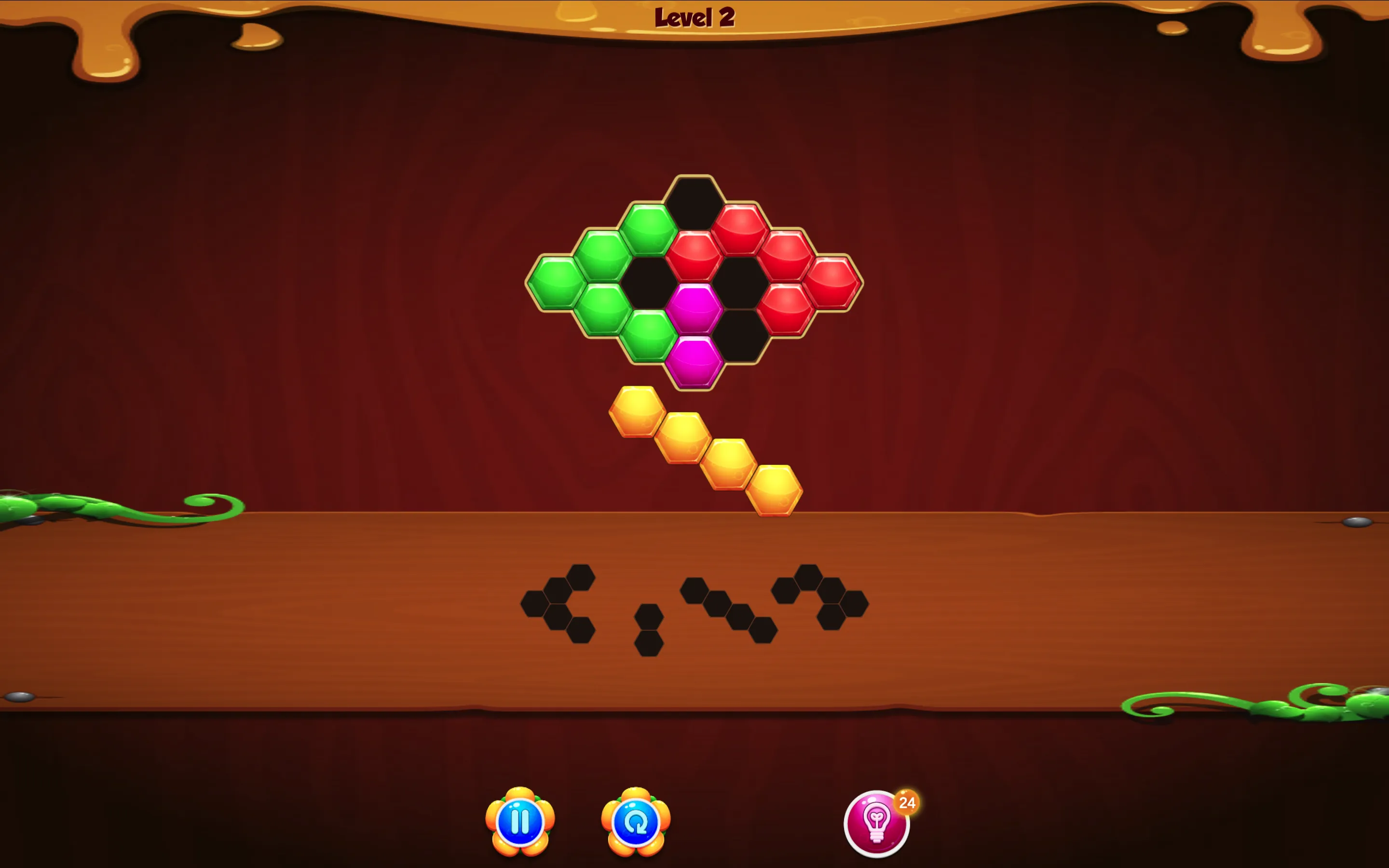
The most common cause of early defeat in Fill Hexa is board fragmentation. Players often drop pieces wherever they fit without looking at the negative space left behind. If your placement leaves an isolated empty cell surrounded on all six sides by filled tiles, that lone cell becomes a dead gap. Unless a rare single-hexagon piece appears in your tray, that space is unusable for the rest of the game.
Strive to keep your empty territory contiguous. One large open pocket of eight connected cells can accommodate almost any shape in the game. Eight single-cell holes scattered across the board cannot accommodate anything larger than a single tile. Build outward flush against existing clusters, clear lines regularly to reset board density, and keep your central corridors wide open.
Fill Hexa Puzzle Game Strategy and Player Q&A
Can you rotate hexagonal pieces before placing them on the board?
No. All hexagonal polyomino pieces are locked in fixed orientations. You must position them onto the honeycomb grid exactly as they appear in the bottom selection tray.
In how many directions can you clear lines on a hex board?
Lines can be formed and cleared in three distinct directions: along the horizontal axis, along the sixty-degree diagonal slant, and along the one-hundred-and-twenty-degree opposing diagonal.
When does the bottom tray refresh with new shapes?
The tray generates a new set of shapes only after you successfully place all three currently displayed pieces onto the board. Plan your moves so all three pieces can fit in sequence.
What happens when no valid move exists on the board?
If none of the shapes currently sitting in your tray can fit into any remaining open spaces on the board, the game ends. Keeping open connected spaces prevents sudden board lockouts.