
Vision Cone Timing and Waypoint Routing in Prison Escape Plan
Prison Escape Plan turns tactical stealth into an intuitive line-drawing puzzle. Viewed from a crisp top-down perspective, you oversee a high-security prison yard populated by moving guards, sweeping spotlights, locked security doors, and multiple inmates waiting to make a break for freedom. Your task is to draw a continuous escape path from each prisoner to the waiting getaway van parked outside the perimeter fence.
The gameplay requires patience and predictive pathing. Guards do not simply stand still; they walk along set patrol routes, pausing periodically to turn around and sweep their vision cones across open hallways. If any inmate steps into a guard yellow or red flashlight cone for even a fraction of a second, sirens blare and the mission ends in immediate failure.
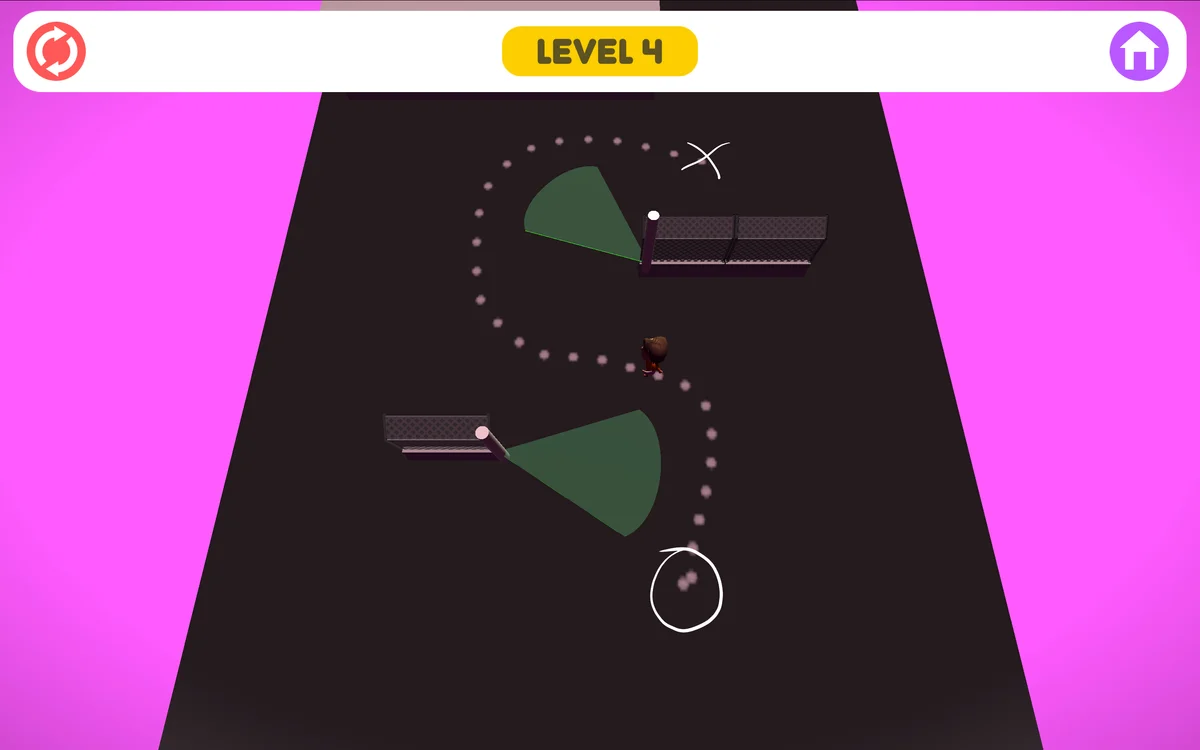
Reading Guard Patrol Loops and Rotation Angles
Before drawing a single line, spend thirty seconds observing the guards on screen. Every guard follows a predictable clockwork routine: they march a set distance, stop for two seconds, rotate ninety or one hundred and eighty degrees, and march back. Notice where their vision cones point during each phase of the patrol.
The safest path is rarely a straight line. Instead, route your prisoners behind guards as they walk away. Since human vision does not extend behind the back, an inmate can sprint right behind an active guard without raising suspicion, provided the route slips into cover before the guard turns at the end of the corridor.
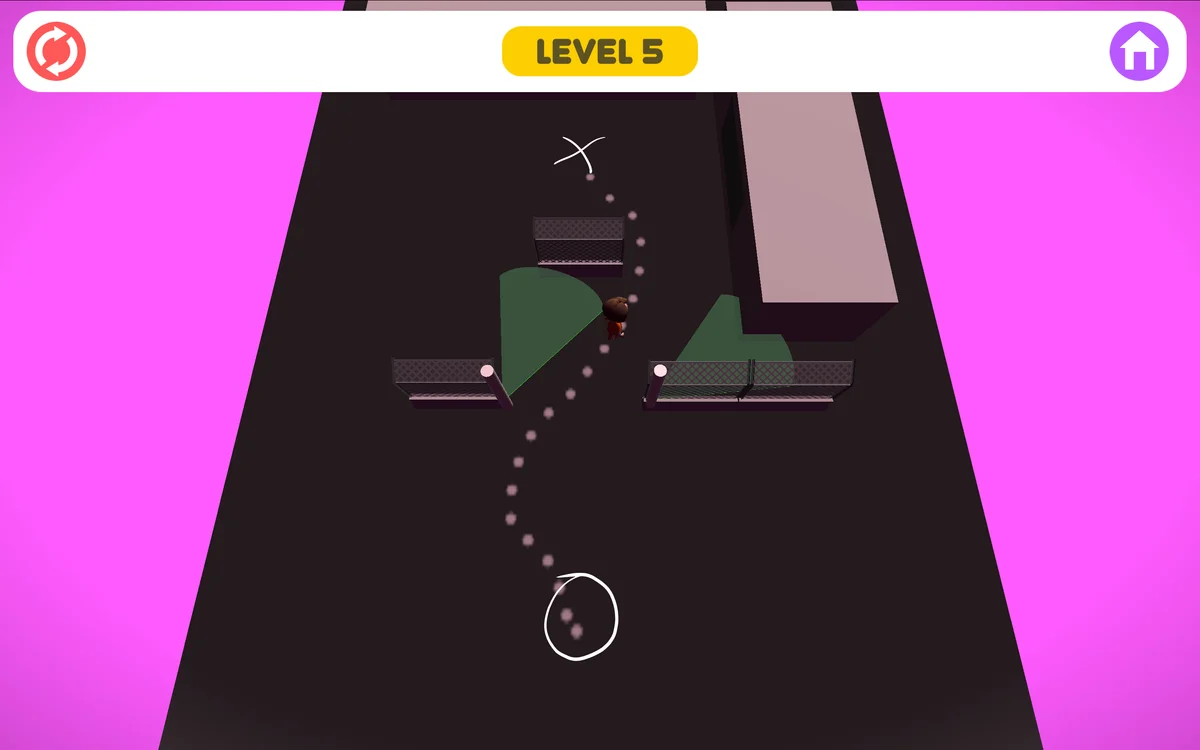
Staggering Multiple Inmate Routes
When a stage tasks you with rescuing two or three inmates simultaneously, coordination becomes crucial. Inmates walk at identical speeds along the lines you draw. If you send two prisoners down the same narrow hallway at the exact same moment, they can create a large target profile that gets clipped by sweeping searchlights.
To avoid bottlenecks, stagger their paths. You can add deliberate detours or loops to an inmate path to delay their arrival at a dangerous intersection, allowing a guard to walk past before the prisoner steps out from cover. Alternatively, use natural cover such as file cabinets, crates, and partition walls as mid-route holding zones where inmates can wait out a patrol sweep.
Precision Drawing and Device Handling
Drawing clean routes is straightforward with a mouse cursor: click the prisoner, drag along your chosen corridors, and release over the getaway vehicle. On touchscreens, drag your finger smoothly, making sure you do not lift your finger until the path snaps onto the vehicle icon. If you lift your finger prematurely, the line terminates in open ground, leaving your inmate stranded in the middle of a guarded yard.
If you see a route is flawed before starting the action, tap the reset icon to redraw the lines from scratch. Planning your routes around guard blind spots and mastering movement delays will guide every inmate to sweet freedom.