Color Layering and Tube Buffer Strategy in Ball Sort
Ball Sort presents a tidy rack of test tubes containing mixed colored spheres. The mechanical rule is simple: you can tap a tube to pop its top ball up, then tap another tube to drop that ball inside. You can only drop a ball into an empty tube, or on top of another ball of the exact same color, provided the destination tube has not already reached its four-ball limit. What starts as a light sorting exercise quickly turns into a tight spatial puzzle as soon as you run out of empty slots.
The central challenge is managing hidden layers. In every mixed tube, the ball sitting at the bottom is trapped until you lift the three spheres resting above it. If you shift those top balls into another tube without a clear destination, you simply relocate your blockage. Real progress comes from calculating your next three transfers before making your first click.
Protecting Your Empty Tubes as Staging Buffers
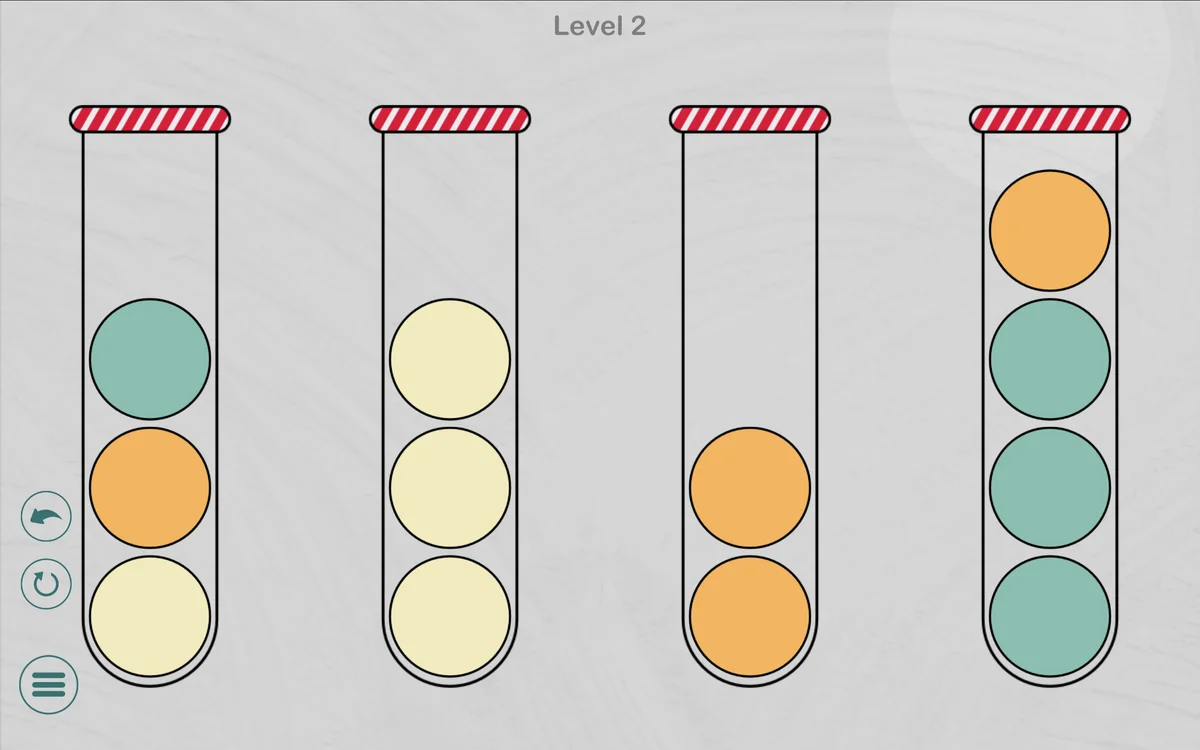
Empty tubes are the most valuable resource on the board. When you have an entirely open tube, you can place any ball into it, which allows you to peel off obstructive layers and rearrange scrambled columns. The moment you drop two mismatched balls into that empty tube, its buffer utility drops to zero. It becomes just another clogged column that requires sorting.
A reliable habit is to reserve one tube strictly for temporary transfers. When you need to dig down to a buried blue ball, move the top red and yellow balls temporarily, extract the blue sphere, and immediately return the red and yellow spheres to their proper homes. If you treat empty tubes as permanent parking spots for miscellaneous colors, you will find yourself in an unwinnable deadlock where no legal moves remain.
Uncovering Buried Base Balls Without Deadlocking
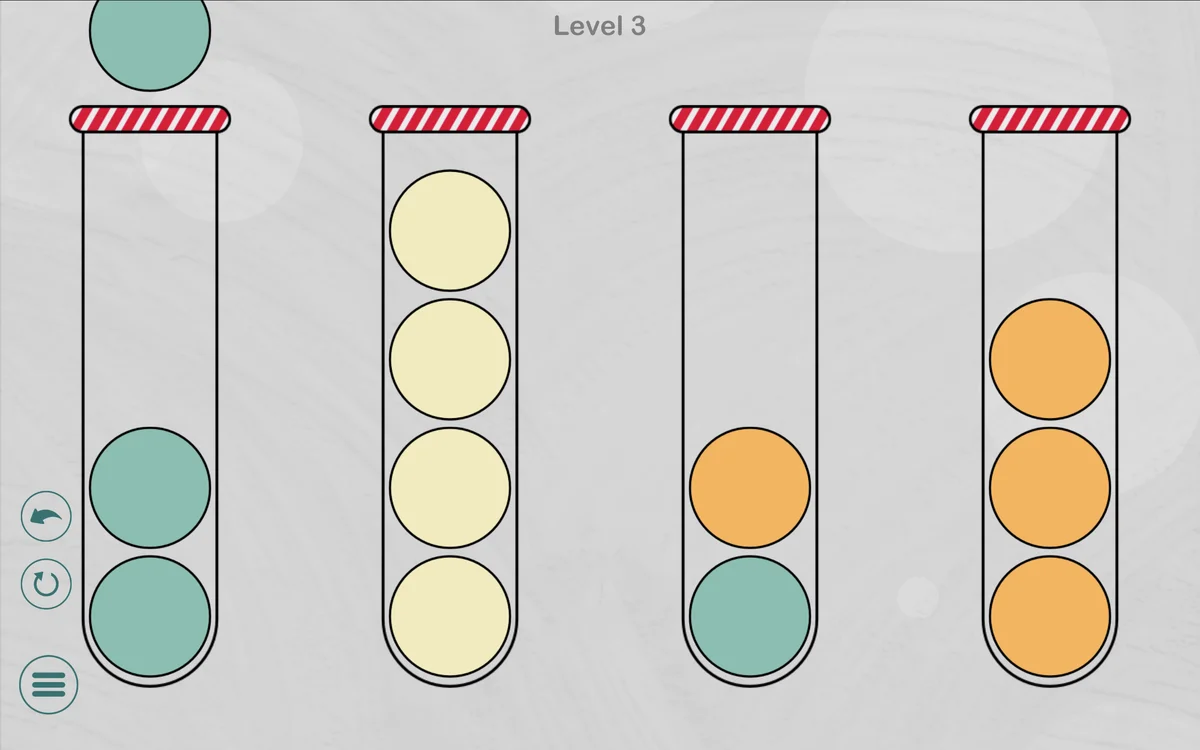
Before moving any ball, look closely at the base of every tube. The spheres resting at the bottom establish the foundation for your finished tubes. If a tube already has two green balls sitting at the bottom, that tube is an ideal candidate to become the permanent green container. Rather than moving those green balls out, your goal should be bringing the remaining green balls to that tube.
When you spot the third and fourth green spheres trapped underneath other colors elsewhere, formulate an extraction order. Shift the covering balls onto matching colors whenever possible. For example, if an orange ball blocks your green sphere, only move that orange ball if another tube has an exposed orange top ready to accept it. Scattering balls across random tubes fragments the board and leaves you with half-filled columns that block one another.
Managing Multi-Ball Transfers and Move Efficiency
When a tube contains two or three identical balls stacked directly on top of each other, moving them requires multiple taps, but the game treats the group logically. Make sure the destination tube has enough open vertical capacity to receive the full cluster. Moving two purple balls into a tube with only one free slot splits the color pair, which costs extra moves to repair later.
Take your time on both desktop and mobile screens. On phones, tapping small glass rims with a broad thumb can register an accidental transfer to a neighboring tube. Tap the body of the tube firmly, watch the ball hover above the rim to confirm selection, and then tap your target tube with intention. Steady, deliberate play prevents costly misclicks and saves you from needing to use the undo button.