Path Anticipation and Cadence Control in Zig Zag
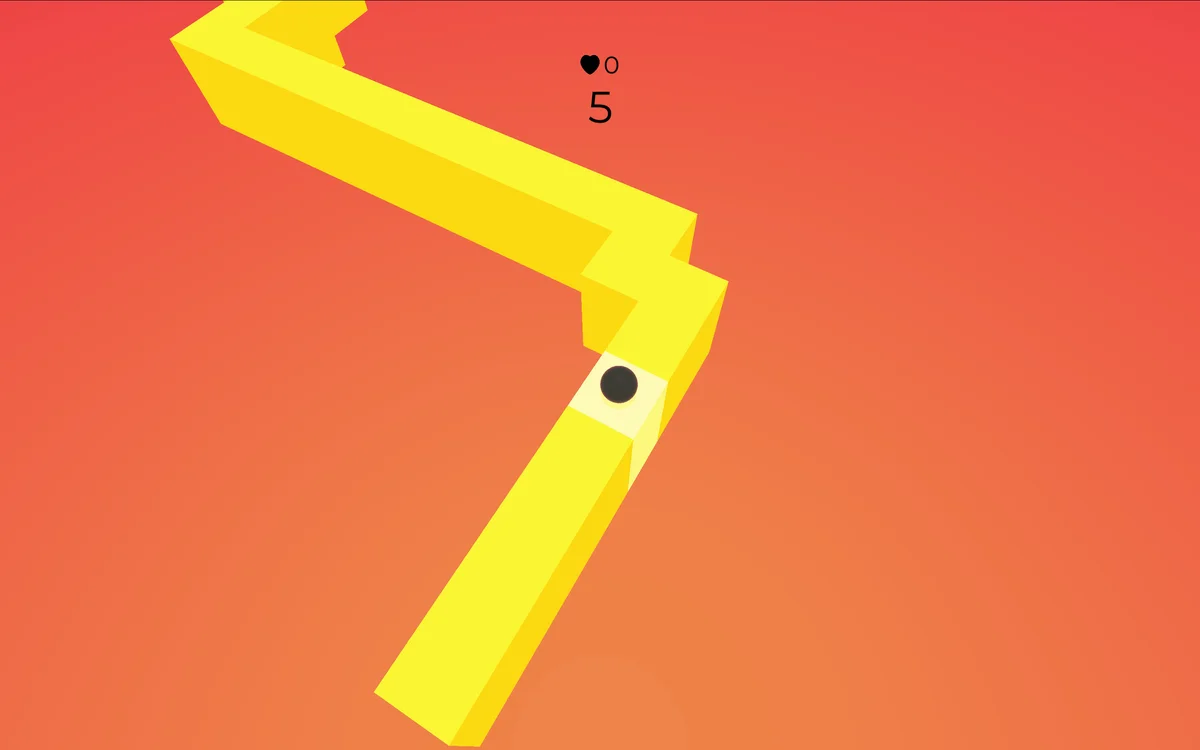
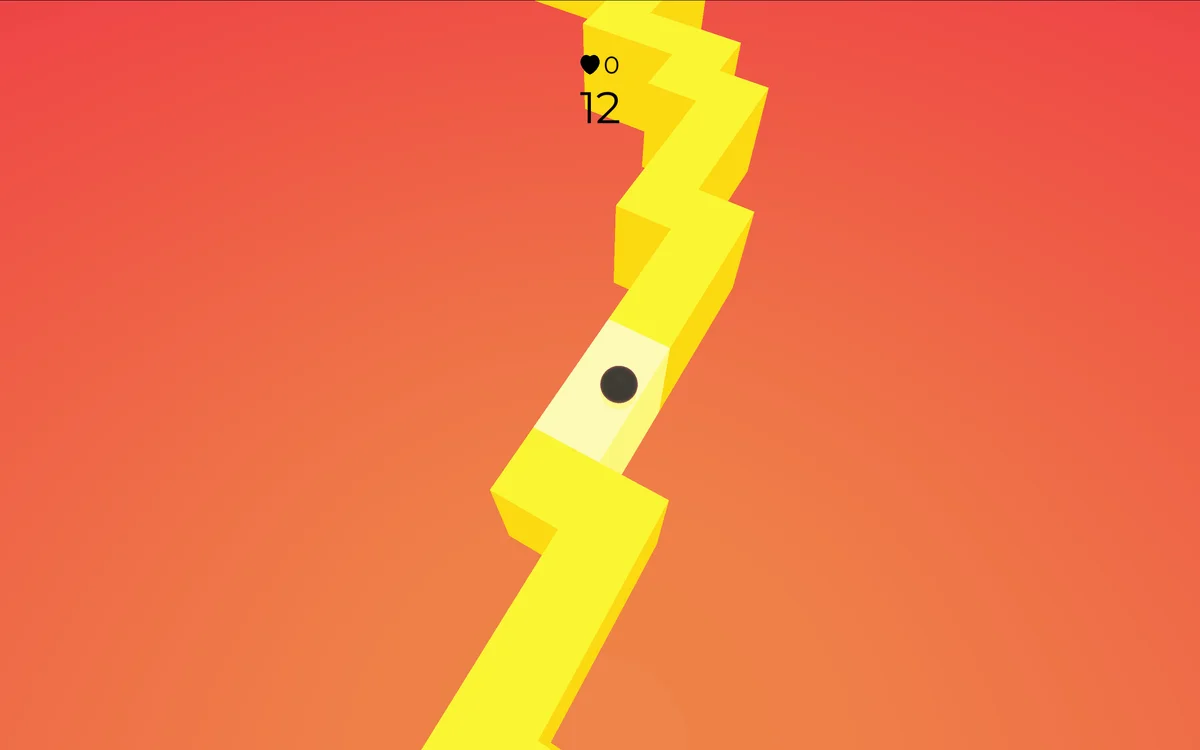
Zig Zag is one of the purest tests of directional timing in the browser arcade genre. You view a floating isometric wall constructed from square blocks, suspended in empty space. A small sphere rolls along this narrow platform at a constant speed. Every tap or click instantly redirects the ball ninety degrees: from forward-right to forward-left, and back again. One missed tap or premature click sends the ball tumbling over the edge into the void.
The core difficulty of Zig Zag is visual fixation. Natural instinct encourages you to stare directly at the ball to ensure it stays centered on the blocks. However, looking at the ball means you only register turns when they arrive directly under the sphere. By that point, your reaction time has evaporated. To survive long runs, you must shift your focus down the track.
Looking Ahead to Read Upcoming Switchbacks
Train your eyes to rest three to four blocks ahead of the rolling ball. At that distance, you can process the shape of the upcoming path before the ball ever reaches it. You can see whether a straight section is long or short, whether a sharp hairpin turn is coming, or whether a rapid series of alternating switchbacks requires a quick double-tap.
When you see a long diagonal stretch, relax your hands and let the ball roll until it nears the apex of the corner. When you see a rapid staircase pattern, prepare your tapping finger for a crisp, metronomic cadence: tap, tap, tap, tap. Treating the track as a sequence of musical beats makes switchbacks feel natural rather than chaotic.
Handling High-Speed Velocity and Narrow Ledges
As your score climbs into the double digits, the ball rolling speed increases subtly. Along with higher speed, the width of the floating path frequently narrows down to a single block width. On single-block sections, there is no margin for error: turning a millisecond late means the ball rolls off the forward edge, while turning early can clip the inner corner and bounce you into the abyss.
Counteract the increased speed by turning slightly before the ball reaches the edge of the block. Because the ball possesses forward momentum, initiating the turn while the sphere is still in the middle of the block allows the pivot animation to complete right at the corner vertex, keeping the ball locked to the centerline.
Gem Collection Versus Survival Priority
Pink diamonds appear scattered along the track, offering bonus points that build your total score. Beginners often swerve off course trying to grab every diamond. Remember that diamonds have zero value if you fall off the edge. If a diamond rests in the dead center of your natural turn route, grab it. If a diamond is placed right on the outer lip of a sharp hairpin turn, ignore it and focus entirely on survival.
On mobile screens, use a single light tap from your index finger or thumb. Keep your wrists resting comfortably on your desk or lap to prevent hand fatigue during marathon runs. Consistent focus and rhythmic tapping will push your high score higher every session.