Scale Equilibrium and Arithmetic Partitioning in Math Balancing
Math Balancing takes fundamental arithmetic and anchors it to physical intuition. In front of you rests a mechanical balance scale with two weighing pans suspended from a central pivot fulcrum. Along the bottom of the screen sits a pool of numbered blocks. Your objective is to distribute these blocks onto the left and right pans so that the mathematical sums on both sides match, bringing the scale pointer to a level center position.
The beauty of Math Balancing is that it transforms mental math from abstract formulas into tangible weights. If the left pan holds a 10 and the right pan holds a 4, the scale physically tips down on the left, giving you an immediate visual cue that the right side needs six units of weight to achieve equilibrium.
Calculating the Equilibrium Target Sum
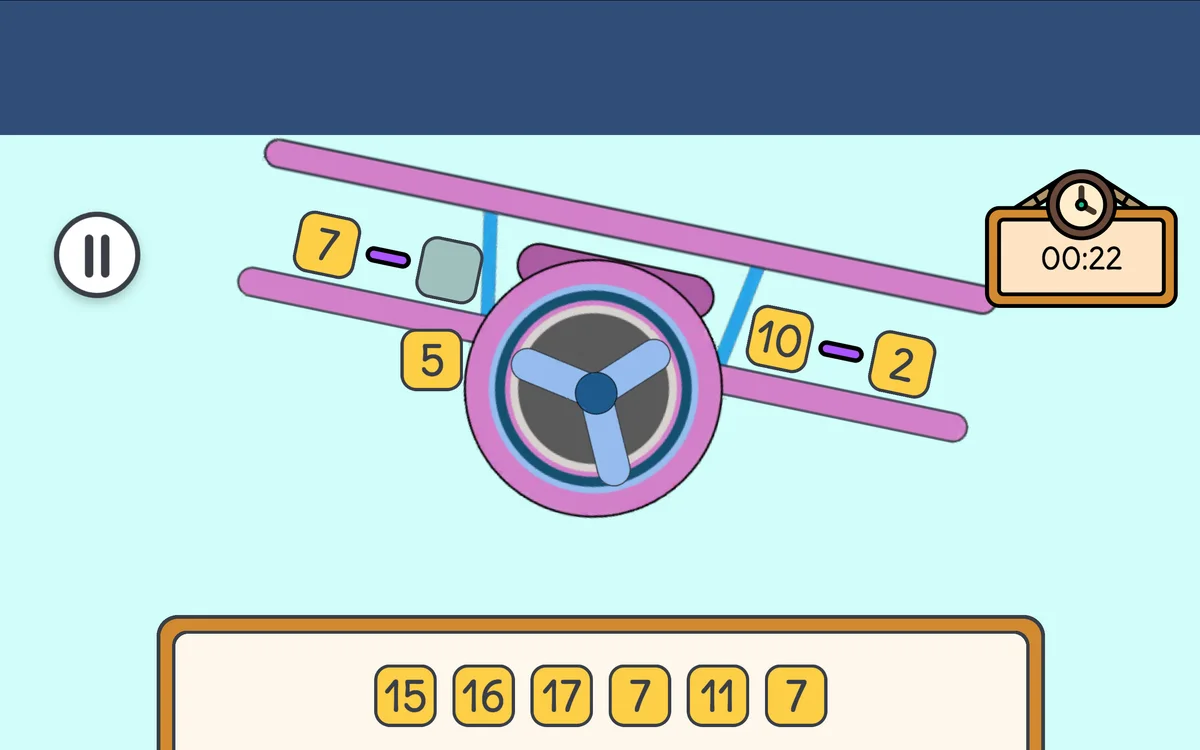
The most systematic method for solving any Math Balancing stage is the partition method. Instead of placing blocks immediately, add up the face values of all the blocks available in the stage. For example, if your block pool consists of 2, 3, 5, 7, 8, and 9, their grand total is 34. Because both pans must balance, each pan must contain exactly half of the total: 17.
Knowing your target number immediately narrows down your search. Instead of juggling six numbers simultaneously, you only need to find a subset that adds up to 17. Looking at the numbers, 9 plus 8 equals 17, which goes on one pan. The remaining numbers (7 + 5 + 3 + 2) also equal 17, fitting neatly onto the opposite pan. This simple math trick cuts trial-and-error down to zero.
Anchor Placement: Managing Large Weights First
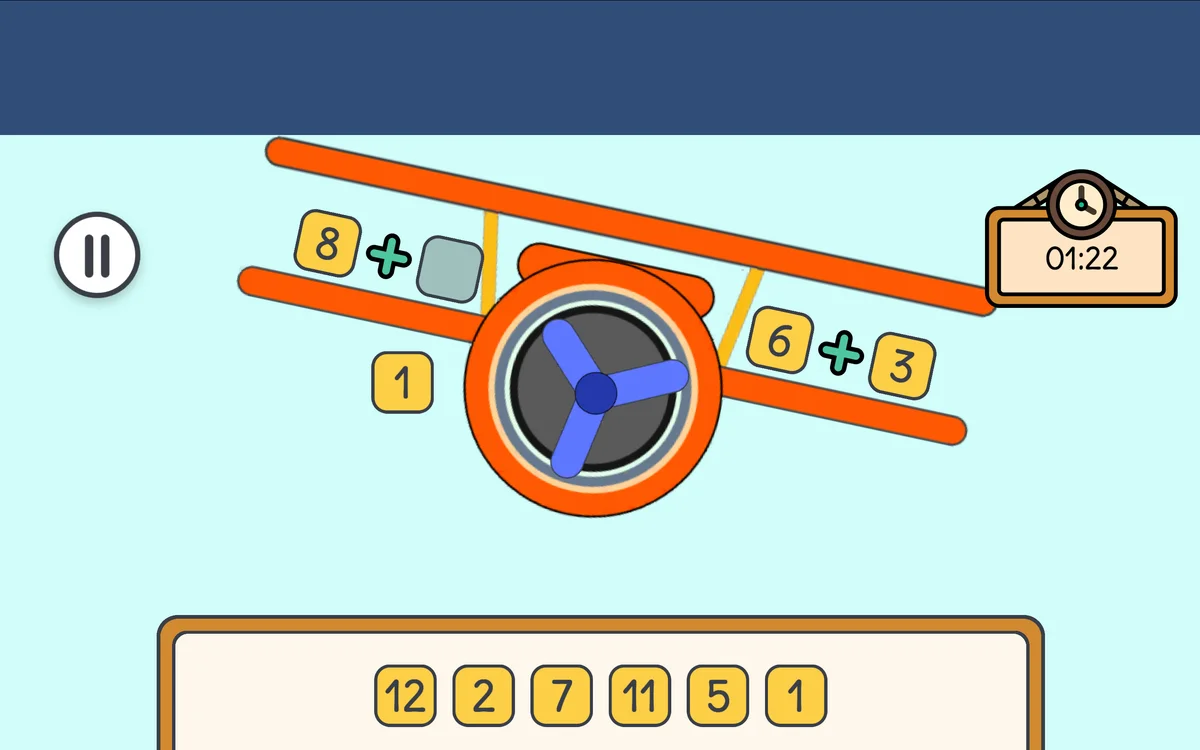
When dealing with larger block pools where mental addition is cumbersome, adopt the anchor principle. Always place your largest number blocks first. A block with a value of 15 or 20 represents the lion share of a pan weight. By dropping that anchor onto one side, you can then treat the other pan as a container to be filled with combinations of smaller numbers.
Never leave your largest block for last. If you place all your 2s, 3s, and 4s onto the scale early, you might end up with an odd discrepancy that a lone heavy block cannot resolve. Save your smallest numbers (1s and 2s) for your final moves, as their low values make them versatile fine-tuning tools to close a one or two-point gap.
Precision Dragging and Ergonomics
On touchscreens, tap and drag blocks smoothly into the pan drop zones. Watch for the subtle highlighting glow that confirms the pan has registered the block before releasing your finger. If a pan is already crowded with several blocks, drop your new block near the center of the pan dish so it stacks neatly without sliding off.
On desktop setups, standard mouse clicks allow swift drag-and-drop maneuvering. If you realize an equation is skewed, you can drag a block from one pan directly to the other without returning it to the bottom pool. Combining quick sums with clean anchor placement turns every scale puzzle into a crisp, satisfying mental workout.