Rhythm, Gravity, and Corridor Navigation in Dunk Fall Ball
Dunk Fall Ball takes the familiar drop mechanic and strips away unnecessary clutter. You start at the top of a vertical blue chute with a basketball caught in free fall. As gravity pulls the ball downward, tapping the screen or clicking your mouse gives the ball an upward pop with a subtle horizontal drift. Your core job is simple: guide that falling ball through basketball hoops mounted along the descent while steering clear of deadly spike traps.
Because gravity accelerates the ball the longer it falls, timing becomes the entire game. A late tap leaves the ball moving too fast to arrest its fall, while an early tap can launch you straight into the underside of a platform. Surviving long runs requires understanding how momentum builds and learning to trust calm, rhythmic taps over frantic tapping.
Reading Obstacle Layouts and Spiked Corridors
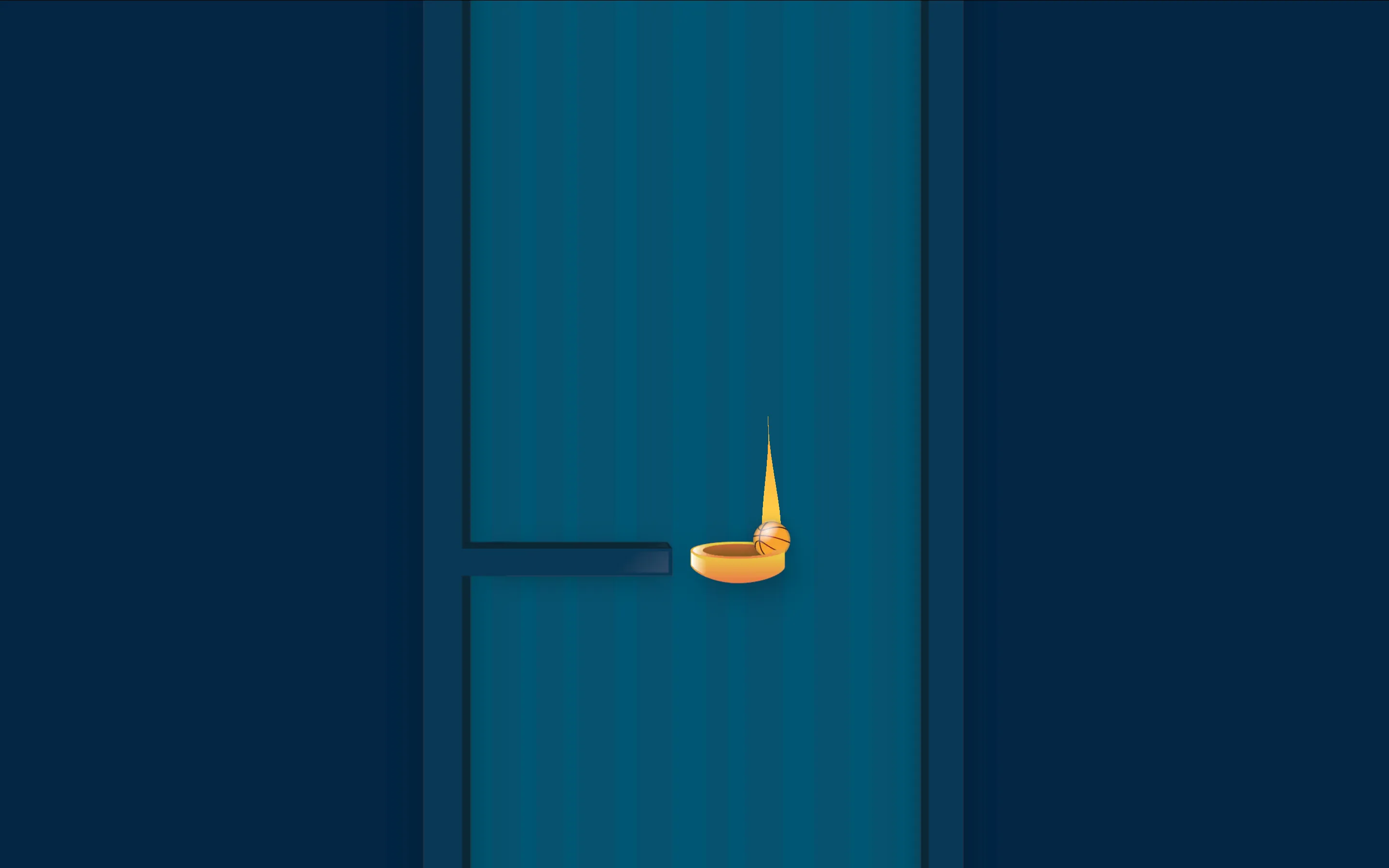
Early sections introduce single hoops attached to horizontal beams that extend outward from the side walls. These give you wide landing zones where a clean drop is straightforward. As you descend further, the level design tightens significantly. You will encounter floating diamond blocks and angled squares that choke the corridor down to narrow funnels.
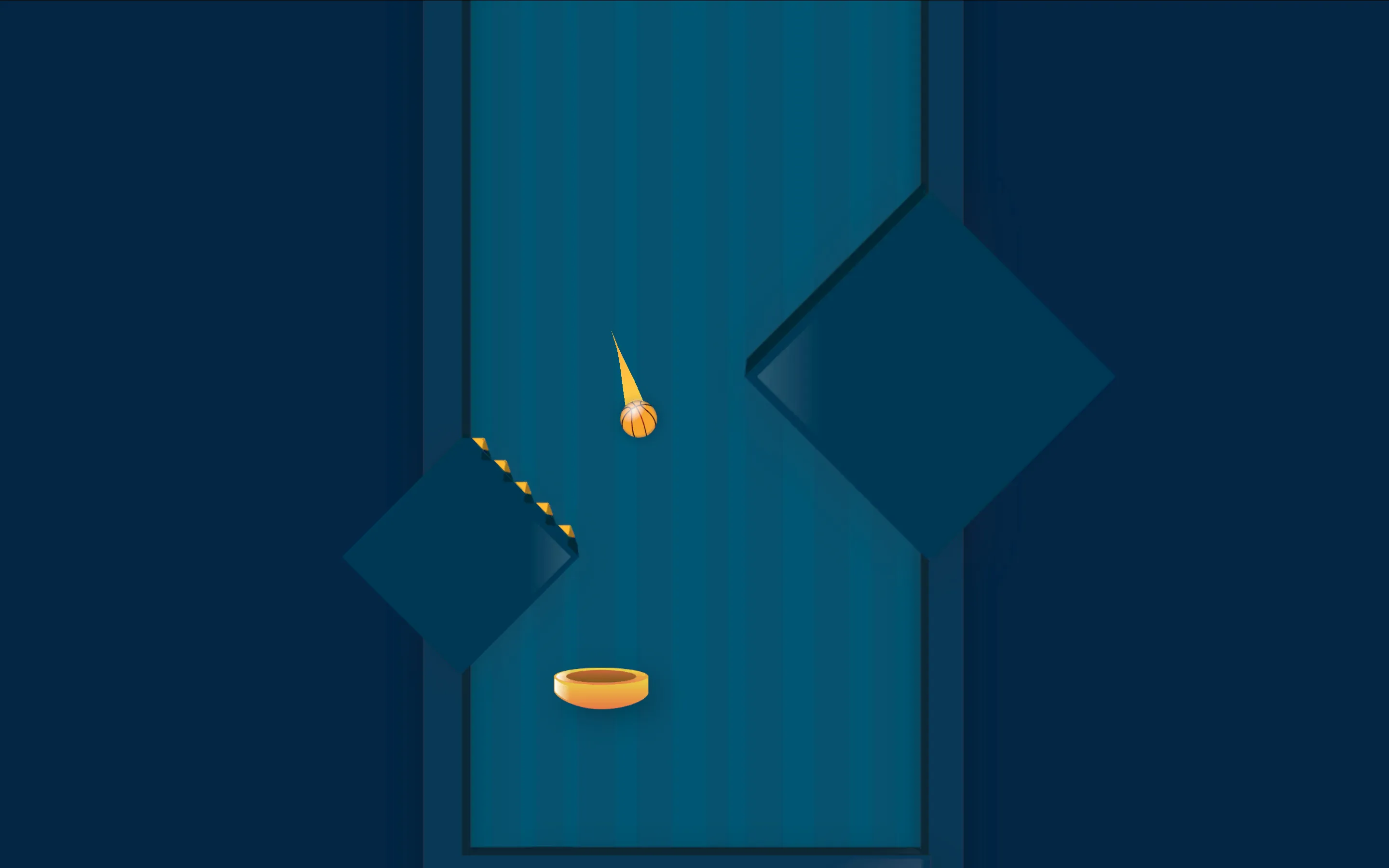
Pay close attention to block surfaces. Some blocks are harmless guide rails that you can bounce off safely, but others feature jagged yellow spike strips along their upper or outer edges. Brushing against even the tip of a spike ends your run instantly. When approaching an angled choke point, aim for the open space well ahead of the obstacle rather than trying to make last-second micro-adjustments.
Managing Fall Speed and Jump Decay
Every tap imparts a fixed amount of vertical lift. That lift does not stack indefinitely; instead, it briefly arrests downward velocity before gravity takes over again. The yellow trail trailing behind the basketball indicates both speed and angle. When the streak stretches long and thin, the ball is falling rapidly, meaning you need to tap slightly sooner to counteract the built-up inertia.
The most reliable tempo is a measured heartbeat cadence. Allow the ball to drop roughly one-third of the screen height between hoops, then deliver a single crisp click to level out the trajectory. If you miss a hoop, do not panic. Sacrificing a point to stay alive is always better than spamming clicks and slamming into a spiked ceiling.
Descent Physics and Player Strategy Q&A
Can you control whether the ball jumps left or right?
No. You cannot manually choose the lateral jump direction with arrow keys or swipe gestures. The ball alternates its lateral drift based on physics, wall contact, and the inherent rebound angle of each hop. Because you cannot steer directly, your focus must stay on vertical height control and aligning your drop with the center of the passage.
What is the difference between a swish and a rim bounce?
Dropping cleanly through the center of the hoop without touching either rim scores a clean swish, which awards extra bonus points and maintains your streak multiplier. If the ball clips the rim, it will often rattle through, but the bounce can throw off your downward angle and push the ball toward perimeter hazards.
How do you recover when the ball is falling too fast?
If the ball enters terminal free fall, deliver two quick taps spaced roughly a quarter-second apart. The first tap cancels the heavy downward momentum, and the second tap restores upward lift. Avoid tapping three or four times in rapid succession, as that almost always propels the ball into hazards above.
Is Dunk Fall Ball easier on mouse or touch controls?
Both input methods are responsive, but mouse clicks provide slightly crisper physical feedback for rapid recovery hops. Touch controls on mobile allow for comfortable one-handed play, provided you rest your thumb near the lower edge of the display so your hand does not obstruct upcoming hoops.